I am learning flutter from JustAcademy, They provide very much great environment where people gather and work simultaneously. totally project based training institute.
MOHD ABU BAKAR ANSARI
Flutter Developer
Awesome Experience. I am a Front-end Web Designer working at Star India for 3 years now. I applied for Full-stack development and my experience has been phenomenal & they really do help with placements exceptionally. Thank you Roshan sir so much.
A complete Pune focused guide to building, learning and launching a career in MEAN stack development
If you are someone in Pune trying to figure out whether this is the right path for you, this guide will walk you through everything from the basics to what employers actually expect. Many learners jump into tutorials without a clear structure, which is why it helps to check out our MEAN stack developer bootcamp in Pune early on, so you know exactly what a structured, project based path looks like before you invest months studying on your own. And honestly, reading about a course is never the same as sitting inside a live class and asking questions in real time, so if any part of this guide gets you curious, you can simply register for a free demo session and see how the training actually feels before you decide anything.
This guide is written specifically with Pune based learners in mind, but a lot of what we cover applies to anyone trying to understand the MEAN stack from the ground up. We will walk through what each layer of the stack does, how MongoDB works both locally and on the cloud, how APIs and microservices fit into modern applications, why JSON matters so much, what a typical mean stack developer job description looks like, and how MEAN compares to its close cousin, MERN. By the end, you should have a fairly clear picture of whether this is the career direction worth pursuing.
What Exactly Is MEAN Stack Development
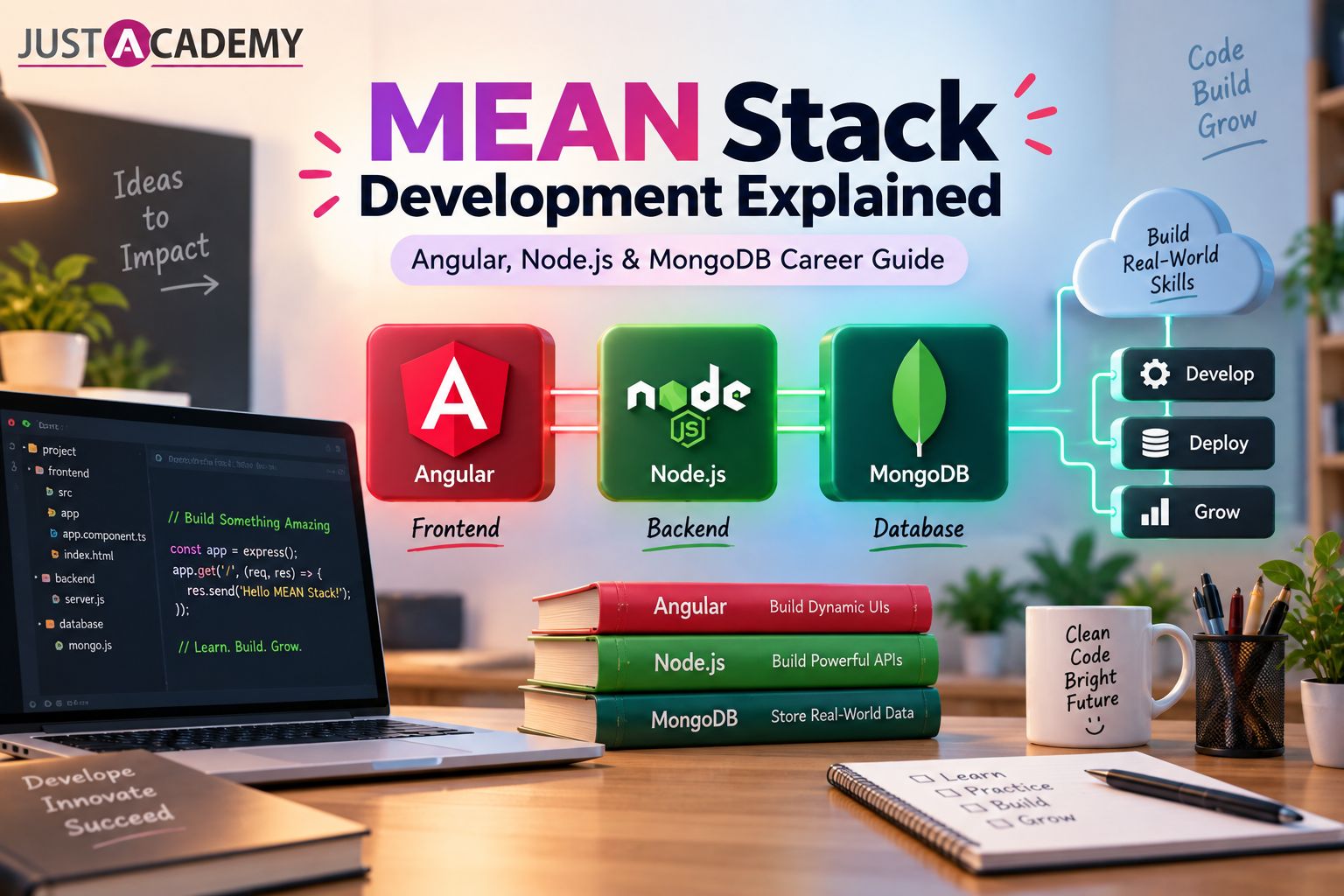
MEAN stack development refers to building web applications using four technologies that work together as one cohesive system. The name itself is an acronym, and once you understand what each letter stands for, the entire concept becomes far less intimidating than it sounds on paper.
The Four Layers That Make Up MEAN
MongoDB handles the database layer, storing your application's data in a flexible document format rather than the rigid rows and columns you would find in a traditional relational database. Express.js sits on top of Node.js and acts as the framework that manages your server side logic, routing and API endpoints. Node.js itself is the runtime environment that allows JavaScript to run outside a browser, which is honestly one of the more clever developments in the history of web programming. Angular, developed and maintained by Google, handles everything on the frontend, giving users the interactive interface they actually see and interact with.
What makes this combination so appealing is that everything from the browser to the database speaks the same language, JavaScript, or in Angular's case, TypeScript which compiles down to JavaScript. There is no mental switching between languages as you move from frontend to backend, which genuinely speeds up development and makes debugging far less painful.
Why Companies Prefer A Single Language Ecosystem
When a team builds mean stack development projects, developers can move between frontend and backend tasks without relearning syntax rules for a completely different language. This is one of the biggest reasons product companies and startups across India, including a growing number in Pune's IT corridors, actively hire for full stack javascript roles rather than splitting teams into strict frontend only or backend only positions.
Breaking Down Each Layer Angular Express Node And MongoDB
Understanding MEAN stack development properly means going one level deeper into each individual component rather than treating them as a single blur of technology.
Angular As The Frontend Powerhouse
Angular is not just another javascript library, it is a complete framework with its own opinions about how applications should be structured. For anyone searching angular for beginners or trying to understand angular programming from scratch, the biggest learning curve usually comes from grasping components, modules, services and dependency injection. Once that clicks though, building an angular app becomes almost systematic.
Angular also brings genuinely useful features to the table such as two way data binding, a powerful angular cli for scaffolding projects quickly, and support for building angular datatables that can handle large volumes of records without slowing down the user interface. Many enterprises, particularly those with net angular backgrounds transitioning to modern javascript ecosystems, find Angular's structured approach comfortable because it mirrors the discipline they are used to from older enterprise frameworks.
If you are serious about becoming an angular developer, our angular developer roadmap for 2026 breaks down exactly which skills and projects will make your profile stand out to recruiters this year.
Node.js And Express Handling The Backend
Node js angular integration is where the real magic of MEAN stack development happens. Node.js allows your server to handle multiple requests asynchronously without blocking, which is a huge advantage for applications with heavy traffic. Express.js then simplifies the process of defining routes, handling middleware and managing HTTP requests, so you are not writing repetitive boilerplate code for every single endpoint.
Together, angular and node js form a tightly connected pipeline where the frontend sends requests, Express routes them, Node processes the logic, and the response travels back to update the angular ui in real time.
MongoDB Explained From Local Setup To Cloud Deployment
MongoDB deserves its own detailed section because it genuinely works differently from the SQL databases most beginners are taught first, and understanding this difference is central to grasping mean stack development as a whole.
Local Database MongoDB Versus Cloud Hosted Options
When you are learning, most tutorials start with a local database mongodb setup running directly on your machine. This is great for practice, but production applications almost always move toward cloud hosted solutions for reliability and scalability. This is where mongodb atlas open source tools and services come into play, giving developers a fully managed cloud database without the headache of manually configuring servers.
If you visit the official mongodb website or mongodb site directly, you will notice how heavily they push Atlas as the primary way to get started today, precisely because it removes so much operational overhead. You can check mongodb cost directly through their pricing calculator on the platform, and most learners are surprised at how generous the free tier is for small to medium projects.
Deploying MongoDB On AWS And Understanding Multi Cloud Support
For anyone planning to work in enterprise environments, aws mongodb integration is a skill worth having early. Whether you are running mongodb and aws together through Atlas's native AWS integration, or manually managing aws with mongodb on EC2 instances, the underlying database concepts stay the same even as deployment complexity increases.
MongoDB also supports mongodb multi cloud deployment strategies, meaning a single database cluster can span across AWS, Azure and Google Cloud simultaneously. This is particularly relevant for larger organizations that want redundancy built into their mongodb data infrastructure without vendor lock in.
MongoDB Document Structure Compared To Traditional Databases
Below is a quick comparison that usually helps clear up confusion between mongodb and sql approaches.
Aspect
MongoDB
Traditional SQL Database
Data Structure
Document based, JSON like format
Rows and columns in fixed tables
Schema
Flexible, can evolve without downtime
Rigid, requires migrations for changes
Scalability
Horizontal scaling built in
Typically scales vertically
Best Suited For
Rapidly changing data, real time apps
Highly structured transactional data
Query Language
MongoDB Query Language
Structured Query Language
The debate around mongodb over mysql or mongodb and sql is not really about one being universally better, it depends entirely on what your application needs. For MEAN stack development specifically, MongoDB's document model pairs naturally with JavaScript objects, which is part of why the combination became so popular in the first place.
Building APIs And Microservices Inside A MEAN Stack Application
Once you move past the basics, real world mean stack development almost always involves connecting your application to external services, and this is where API knowledge becomes non negotiable.
Integrating Third Party APIs Into Your Projects
Practical projects rarely stay confined to internal logic alone. A payment gateway api like Razorpay is often one of the first integrations developers tackle, and learning razorpay api integration teaches you patterns that apply to almost every other payment provider too. Similarly, whatsapp developer api integration has become extremely common for businesses wanting automated customer communication directly through their applications.
Enterprise projects frequently require connecting to CRM and marketing platforms as well. Salesforce api integration and general salesforce api work allow applications to sync customer data seamlessly, while api sales force implementations often form the backbone of larger business automation systems. Marketing focused applications might rely on mailchimp api for email campaigns, and project management tools frequently connect through jira rest api or general jira rest endpoints to pull ticket data into custom dashboards. Even linkedin api integrations show up in recruitment and networking platforms built by teams exploring rest api integration as a core skill set.
Microservices Architecture And Where MEAN Fits In
As applications grow, monolithic structures eventually become difficult to maintain, which is why building a microservice based architecture has become the industry standard for larger systems. Understanding microservices architecture conceptually means learning how to break a large application into smaller, independently deployable services that communicate over well defined APIs.
Interestingly, microservices architecture java approaches and microservices java architecture patterns share a lot of conceptual overlap with how Node.js handles service separation, even though the actual implementation languages differ. Developers familiar with spring boot microservices architecture often find the transition to Node based microservices smoother than expected because the underlying design patterns microservices philosophy, things like service discovery, load balancing and independent scaling, remain consistent across languages.
For teams working in more complex enterprise environments, azure integration developer roles have grown significantly, since Azure provides robust tooling for deploying and managing microservices at scale alongside MongoDB backed applications.
Micro Frontend Architecture For Large Angular Applications
On the frontend side, particularly for very large Angular projects, teams are increasingly adopting micro frontend architecture, where different parts of the user interface are developed and deployed independently by separate teams, then assembled together at runtime. This mirrors the microservices philosophy but applied to the presentation layer, and it is becoming an important concept for anyone aiming for senior angular developer roles.
Working With JSON The Backbone Of Every MEAN Stack Application
If there is one format that ties the entire MEAN stack together, it is JSON, and understanding it properly separates beginners from developers who can actually debug production issues confidently.
Understanding Proper JSON Structure
Learning json properly means understanding json object structure, key value pairs, nested arrays and how data types map between JavaScript and the json data format online standards. A single misplaced comma can break an entire API response, so getting comfortable with correct json format and proper json format early on saves enormous frustration later.
Tools For Reading And Validating JSON
Most developers eventually pick up a dedicated json format reader or browser extension json tool to view json files quickly without manually formatting them. These small utilities help you structure json responses correctly, spot errors in json structure instantly, and generally make working with document json data far less error prone, especially when you are debugging API responses at two in the morning before a deadline.
MEAN Stack Developer Job Description And Skills Employers Expect
If you are researching this topic seriously, you have probably already searched mean stack developer job description on job portals, and the listings tend to follow a fairly predictable pattern across companies.
Core Technical Skills Recruiters Look For
Most job postings expect solid command over Angular, including angular project experience with real deployed applications, comfort with node js angular integration, and a working understanding of Express routing. Beyond that, familiarity with mongodb data modeling, RESTful API design, and basic microservices architecture concepts consistently appears across mid to senior level roles.
Employers also increasingly value developers who understand full stack development with react and node js alongside their Angular skills, simply because it makes candidates more versatile across different company tech stacks. Even if your primary strength is Angular, having exposure to full stack development with react & node js broadens your employability significantly.
Soft Skills And Practical Experience That Matter
Technical knowledge alone rarely gets someone hired for a full stack developer with node js position. Employers consistently mention project experience, the ability to debug independently, comfort working in agile teams, and basic understanding of deployment pipelines. This is exactly why structured training programs that include real projects tend to produce candidates who perform noticeably better in technical interviews compared to those who studied purely through scattered online tutorials.
For a deeper breakdown of exactly which skills and projects will strengthen your resume this year, our detailed MEAN stack developer roadmap for 2026 covers the progression from beginner concepts all the way to job ready projects.
MEAN Stack Versus MERN Stack Which Path Should You Choose
This comparison comes up constantly, and honestly there is no single correct answer, it depends entirely on your goals and the kind of companies you want to work for.
Key Differences Between The Two Stacks
The only real difference between MEAN and MERN lies in the frontend framework. MEAN uses Angular while MERN uses React. Everything else, Express, Node and MongoDB, stays identical between the two stacks.
Factor
MEAN Stack
MERN Stack
Frontend Framework
Angular
React
Learning Curve
Steeper initially, structured approach
Gentler initially, more flexible
Best For
Large enterprise applications
Startups needing fast iteration
Job Market Demand
Strong in enterprise and product companies
Very strong across startups and agencies
Community Size
Large, backed by Google
Larger overall, backed by Meta
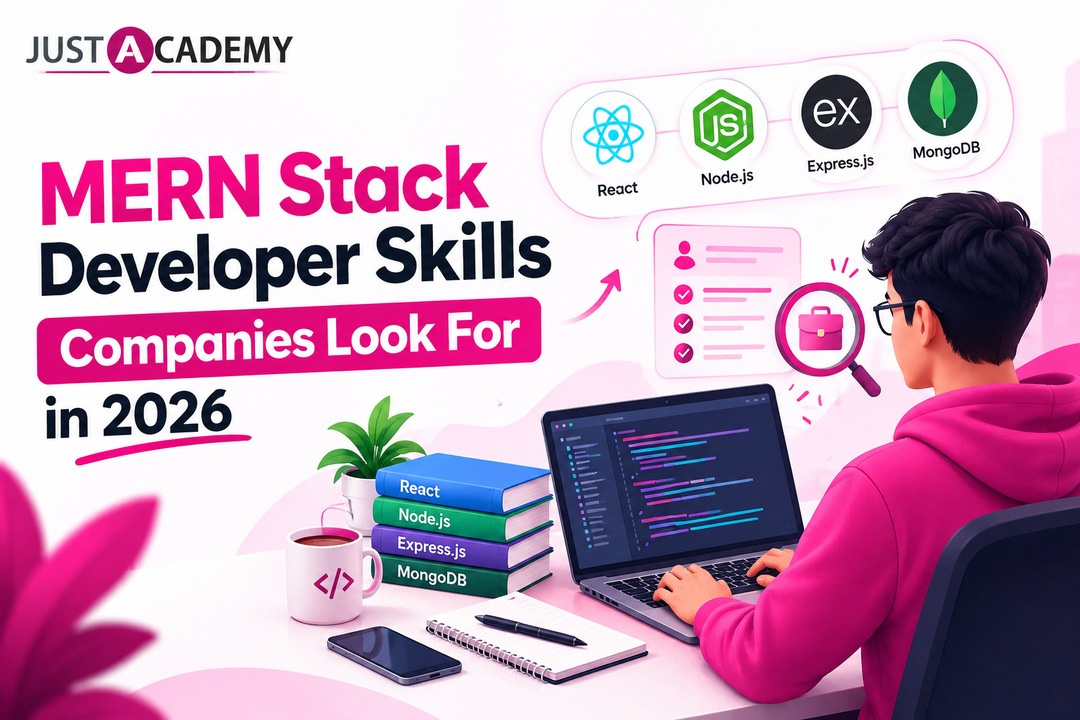
Neither stack is objectively superior, and many experienced developers end up learning both over time. If you want a detailed look at what makes MERN developers attractive to recruiters specifically, our guide on MERN stack developer skills companies look for in 2026 pairs well with everything covered in this article.
Should You Learn Both Eventually
Once you are comfortable with fullstack javascript concepts through MEAN, picking up React and transitioning toward full stack with react becomes noticeably easier because the underlying Node and Express knowledge transfers directly. Many working developers in Pune eventually become comfortable across both ecosystems, switching between angular website projects and React based products depending on what their employer or client needs at the time.
It is also worth mentioning that some learners explore entirely different combinations altogether, such as a react js and python django full stack master course, particularly if they are drawn toward Python's data science and automation capabilities alongside web development. There is genuinely no wrong path here, it comes down to what excites you enough to stick with it through the harder learning phases.
Why Structured Training Makes A Real Difference
Learning MEAN stack development entirely through scattered YouTube videos and random blog posts is possible, but it usually takes significantly longer and leaves noticeable gaps in understanding, especially around debugging, deployment and real project structure.
The Value Of Live Interactive Sessions
At JustAcademy, our live interactive sessions are designed so that Pune based learners can ask questions in real time, exactly the way you would in a physical classroom, without needing to travel unless you specifically want the offline classroom experience at our Mumbai center. Every session is mentor led session by trainers who have actually worked on production MEAN stack applications, not just people reading slides aloud.
This instructor led session format means you are not just watching prerecorded content, you are building projects alongside a mentor who can immediately spot where your code is going wrong and explain why, which honestly accelerates learning far more than solo troubleshooting ever could.
Hands On Projects And Placement Support
Beyond just teaching syntax, our programs focus heavily on real project work, covering everything from Angular frontend development to Node and Express backend logic, MongoDB database design, and even API integrations similar to the ones discussed earlier in this guide. Learners also receive placement support once they complete the program, which includes resume guidance and interview preparation tailored specifically toward mean stack developer roles.
If you are based in Pune and want a structured path into this career, our MEAN stack developer bootcamp in Pune is built around enterprise style application training, giving you exposure to the kind of projects companies actually expect from new hires. For learners who want an even broader scope covering multiple full stack technologies together, the Full Stack Developer Pro bootcamp in Pune is job oriented and structured to prepare you for a wider range of full stack roles beyond just MEAN.
And if Angular specifically is where you want to start building depth before committing to the full stack, our JavaScript training in Pune is a solid foundation course that strengthens the core language skills every angular developer eventually relies on, regardless of which framework they specialize in later.
Conclusion
MEAN stack development is not just another trending buzzword floating around Pune's job market, it represents a genuinely practical and widely adopted approach to building modern web applications. From Angular handling the interface, through Node and Express managing server logic, all the way to MongoDB storing your data flexibly, this stack gives developers a cohesive JavaScript centered workflow that companies continue to invest in.
Whether you are just starting out and searching angular for beginners content, or you already understand the basics and want to strengthen your grasp on microservices, API integrations and cloud deployment with MongoDB, the path forward becomes far clearer with structured guidance and real project practice rather than piecing things together alone.
If this guide has clarified where you stand and what comes next, the best move is to experience the training format firsthand rather than just reading about it. You can book your free demo session today and sit in on an actual live class, or if you prefer reviewing the complete curriculum first, feel free to download our detailed brochure and explore everything the program covers at your own pace.
What Exactly Is MEAN Stack Development
MongoDB Explained From Local Setup To Cloud Deployment
MEAN Stack Developer Job Description And Skills Employers Expect
MEAN Stack Versus MERN Stack Which Path Should You Choose
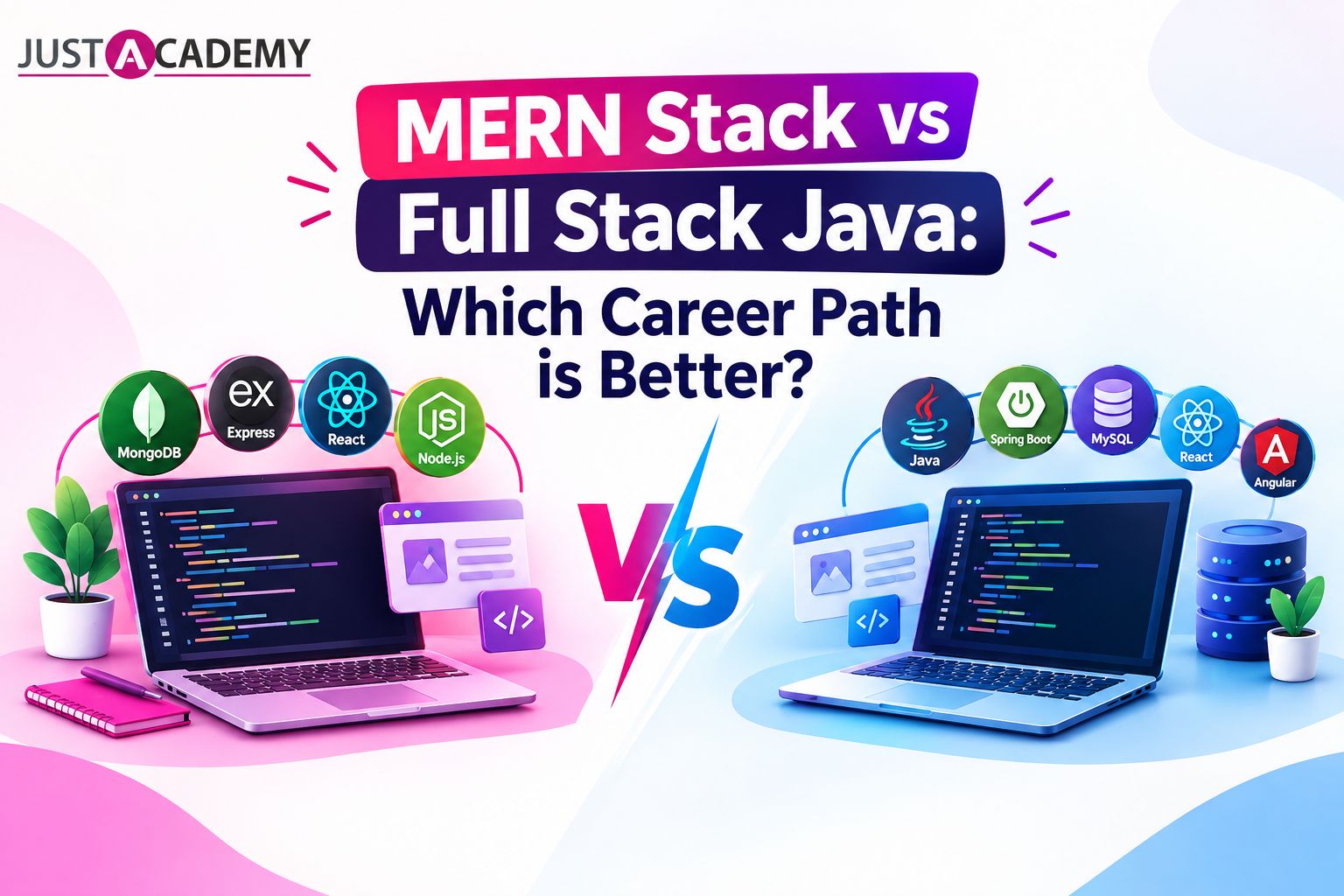
A practical comparison for Pune based learners choosing between MERN and Java full stack development, covering salary, learning curve, job roles, and long term career growth.